
Population health sciences and population medicine are increasingly important fields for professionals who want to improve health outcomes beyond the individual patient. These disciplines examine how healthcare systems, socioeconomic conditions, environmental exposures, genetics, public policy, and individual behaviors influence the health of entire populations.
The best population health sciences graduate programs prepare students to investigate health disparities, evaluate medical interventions, analyze large healthcare datasets, and develop evidence-based strategies to improve healthcare delivery. Depending on the university, students may pursue a Master of Science (MS), Doctor of Philosophy (PhD), or a related graduate degree focused on population health, epidemiology, health services research, or population medicine.
For prospective students comparing graduate programs, the most important considerations include research specialization, faculty mentorship, quantitative training, access to clinical and population-level data, funding, and career objectives.
This guide highlights 10 universities offering graduate programs in population health sciences or closely related disciplines. The list is a curated selection based on program relevance, research opportunities, interdisciplinary training, and degree options—not an official numerical ranking. Applicants should verify current degree offerings, admission requirements, and funding policies directly with each institution.
10 Best Population Health Sciences / Population Medicine Graduate Programs
Select a university name to visit its official website. Select the image-source link to review the photograph and its licensing terms.

Rank 1. Harvard University
Cambridge and Boston, Massachusetts
Program: PhD in Population Health Sciences
Harvard’s doctoral program is suited to students pursuing interdisciplinary research on the determinants of health and disease. Research areas include epidemiology, environmental health, global health, nutrition, and social and behavioral sciences.
Best for: Students interested in academic research, advanced quantitative methods, and interdisciplinary population health investigations.
Image source: Review Harvard campus images and licenses

Rank 2. Duke University
Durham, North Carolina
Program: MS in Population Health Sciences
Duke’s master’s program provides research-oriented training for students interested in understanding population health outcomes, health disparities, healthcare delivery, and research methodology.
Best for: Students seeking master’s-level research preparation and analytical skills for healthcare research or further doctoral study.
Image source: Review Duke campus images and licenses

Rank 3. University of Wisconsin–Madison
Madison, Wisconsin
Program: Graduate programs in Population Health
The university offers graduate training for students interested in how healthcare systems, economic conditions, social environments, and public policy influence health outcomes. Research opportunities may include health economics, health services, and health disparities.
Best for: Students interested in population-level data analysis, healthcare policy, and health systems research.
Image source: Review campus images and licenses

Rank 4. New York University
New York, New York
Program: Graduate research training in Population Health
NYU provides interdisciplinary opportunities to study population health determinants, healthcare disparities, and the relationship between social conditions and health outcomes. Applicants should review the university’s current program listings to identify the appropriate degree.
Best for: Students interested in urban health, health equity, and interdisciplinary medical research.
Image source: Review NYU campus images and licenses

Rank 5. University of Texas Medical Branch
Galveston, Texas
Program: PhD in Population Health Sciences
UTMB’s academic health sciences environment offers opportunities to investigate the clinical, behavioral, environmental, and social factors that shape health. Doctoral training is appropriate for students seeking advanced research expertise.
Best for: Prospective researchers interested in population health methods and the relationship between clinical medicine and population-level outcomes.
Image source: Review UTMB campus images and licenses
Rank 6. Thomas Jefferson University
Philadelphia, Pennsylvania
Program: PhD in Population Health Science
Thomas Jefferson University offers doctoral training focused on applied population health research and the translation of evidence into healthcare practice and policy. Its interdisciplinary setting connects health sciences, clinical research, and healthcare delivery.
Best for: Students interested in applied research, health system improvement, and population health leadership.
Image source: Find campus images and review licenses

Rank 7. University of British Columbia
Vancouver, British Columbia, Canada
Program: Graduate study in Population and Public Health
UBC’s School of Population and Public Health provides research training in areas related to population health, epidemiology, public health policy, and health services. Its research environment supports students investigating health challenges at community and population levels.
Best for: Students interested in public health research and population-level health policy.
Image source: Review UBC campus images and licenses

Rank 8. University of Saskatchewan
Saskatoon, Saskatchewan, Canada
Program: MSc and PhD in Community and Population Health Sciences
The university’s graduate training addresses community health, population health research, health policy, and the factors that contribute to differences in health outcomes. Students can explore research questions relevant to communities and healthcare systems.
Best for: Students interested in community-based research, population health policy, and academic research careers.
Image source: Review campus images and licenses

Rank 9. University of New Mexico
Albuquerque, New Mexico
Program: Related graduate programs in population health and public health
UNM provides opportunities for graduate study and research in public health and health sciences. Relevant areas include community health, health services, health systems, and health policy, including challenges affecting underserved populations.
Best for: Students interested in applied public health research and health equity.
Image source: Review campus images and licenses
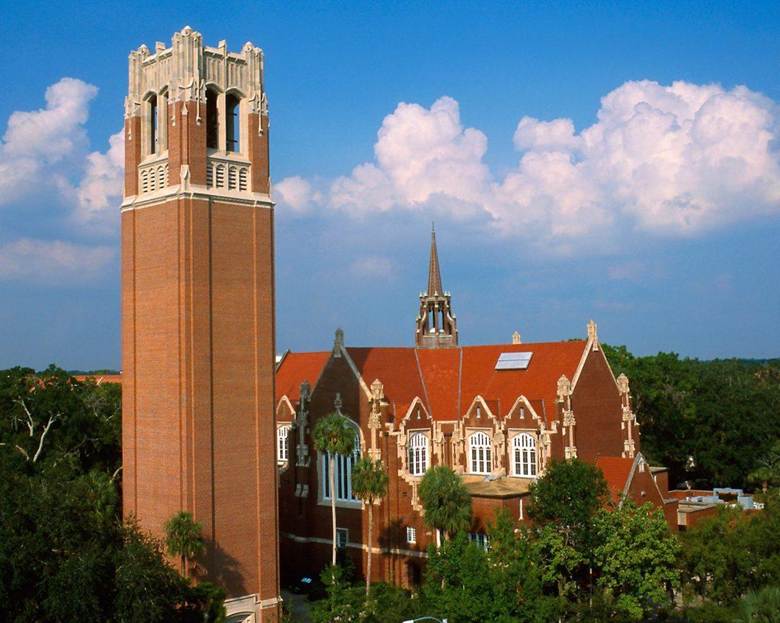
Rank 10. University of Florida
Gainesville, Florida
Program: Related graduate training in epidemiology and public health
The University of Florida offers graduate education in public health and related health sciences disciplines. Students can pursue population-level research through relevant programs in epidemiology, health promotion, and public health.
Best for: Applicants interested in epidemiology, prevention, and applied population health research.
Image source: Review campus images and licenses
Image licensing note: The images displayed above are illustrative campus previews, not verified copies of the licensed files linked below them. Before publishing, download the selected image from its original file page and confirm that its license permits commercial use. Follow any attribution or share-alike requirements.
Powered by Best Colleges
How to Choose the Right Population Health Graduate Program
Selecting a graduate program requires more than comparing university reputations. Students should assess research specialization, faculty expertise, degree structure, funding, and career outcomes.
1. Identify your preferred research specialization.
Population health is interdisciplinary, and program offerings vary. Common areas of specialization include:
- Epidemiology: Investigating disease patterns, risk factors, and health outcomes across populations.
- Health services research: Evaluating healthcare access, quality, cost, and delivery systems.
- Health policy and economics: Examining insurance systems, policy effectiveness, and resource allocation.
- Social and behavioral sciences: Investigating how social conditions, behavior, and structural inequalities affect health.
- Environmental and global health: Studying environmental exposures and international health challenges.
- Population medicine: Applying population-level evidence to clinical practice, preventive care, and healthcare delivery.
Review faculty research interests and recent publications before applying. A program’s research environment may be more important than the exact title of its degree.
2. Compare master’s and doctoral degrees.
The right degree depends on whether you want to apply existing research, conduct independent investigations, or pursue an academic career.
| Degree | Primary focus | Potential career paths |
| MS or MSc | Research methods, data analysis, and specialized knowledge | Research analyst, research coordinator, health data analyst |
| MPH | Applied public health practice and population-level interventions | Public health specialist, program evaluator, health policy analyst |
| PhD | Independent research, advanced methodology, and dissertation work | Research scientist, professor, senior health researcher |
| DHSc or related professional doctorate | Applied leadership and translating evidence into practice | Population health leader, healthcare program director |
Degree titles and curricula vary. An MPH is not interchangeable with a research-focused MS, and a professional doctorate may not provide the same preparation for independent academic research as a PhD.
3. Evaluate research facilities and faculty mentorship.
Strong population health research depends on access to appropriate datasets, statistical resources, clinical collaborators, and experienced faculty.
Look for opportunities to work with electronic health records, population surveys, insurance claims, longitudinal studies, or community health datasets. Students interested in causal inference, biostatistics, or health economics should confirm that their preferred methods are represented in the curriculum and faculty expertise.
4. Investigate funding and total program costs.
Doctoral programs may offer tuition support, research assistantships, teaching assistantships, or stipends, while master’s students may rely more heavily on institutional scholarships or personal funding.
Before accepting an offer, compare tuition, mandatory fees, stipend amounts, health insurance, funding duration, and any teaching or research obligations. Funding policies can change between admissions cycles, so applicants should consult current university guidance.
5. Check admission requirements and program format.
Applicants should review prerequisite coursework, quantitative preparation, research experience, recommendation letters, and statement-of-purpose requirements.
Some research-focused programs expect a foundation in statistics or quantitative methods. Applicants should also verify whether their chosen degree is offered full-time, part-time, in-person, or in a hybrid format. Do not assume that a program is available online simply because the university offers online degrees in other disciplines.
What Can You Do With a Graduate Degree in Population Health Sciences?
Graduates can pursue careers in universities, hospitals, public health agencies, healthcare organizations, research institutes, pharmaceutical companies, consulting firms, and nonprofit organizations.
Potential career paths include:
- Population health researcher: Studies health outcomes and the factors that influence them.
- Health services researcher: Evaluates healthcare quality, access, costs, and delivery models.
- Epidemiologist: Investigates disease distribution and develops evidence to guide prevention efforts.
- Health policy analyst: Assesses policies and their effects on healthcare systems and populations.
- Clinical research scientist: Designs or evaluates studies involving clinical outcomes and patient populations.
- Biostatistician or health data analyst: Applies statistical methods to medical and public health data, depending on training.
- Public health program evaluator: Measures the effectiveness of community interventions and health initiatives.
- Academic faculty member: Teaches and conducts research, generally requiring a PhD for research-intensive university positions.
Career eligibility depends on the degree, research experience, technical skills, employer requirements, and applicable professional credentials. Some roles require specialized training or licensure.
Frequently asked questions
What is the best population health sciences graduate program?
There is no single best program for every student. Harvard is an option for interdisciplinary doctoral research, Duke offers a research-oriented master’s degree, and the University of Wisconsin–Madison provides graduate training in population health. The best fit depends on your specialization, funding needs, faculty interests, and intended career.
Is population health the same as public health?
Not exactly. Public health is a broad discipline concerned with protecting and improving community health. Population health focuses specifically on the outcomes and distribution of health within defined groups and the factors that influence those outcomes. Population health research often draws on public health, medicine, economics, sociology, epidemiology, and health services research.
Is a master’s degree enough for a career in population health?
Yes, for many applied research, analytical, program coordination, and public health positions. A master’s degree can provide the methodological and subject-matter foundation needed for these roles. However, positions involving independent academic research, university faculty appointments, or leadership in specialized research programs may require a PhD or substantial additional experience.
Can you study population health sciences online?
Some related programs offer online or hybrid options, but availability varies by institution and degree. Applicants should confirm the delivery format, required campus visits, and any in-person research commitments directly with the university before applying.
What undergraduate degree is best for population health sciences?
Relevant backgrounds include public health, biology, statistics, psychology, sociology, economics, nursing, medicine, and other quantitative or health-related disciplines. Research-focused doctoral programs generally value analytical preparation, research experience, and a clear explanation of the applicant’s intended research direction. Specific prerequisites vary by program.
Are population health sciences graduate programs worth it?
They can be worthwhile for students seeking specialized research skills and careers focused on improving health outcomes at scale. The value depends on program cost, available funding, research opportunities, career outcomes, and alignment with the student’s goals. Prospective students should compare the expected financial commitment with the qualifications required for their target roles.
Closing
Final thoughts
The best population health sciences graduate programs combine rigorous research training with opportunities to investigate real-world health challenges. Whether your interests involve epidemiology, healthcare delivery, health equity, environmental exposures, or population medicine, the right program should provide the methodological foundation and faculty mentorship necessary to pursue your objectives.
Before applying, compare curricula, faculty research, funding arrangements, admissions requirements, and career outcomes at each institution. Confirm current degree offerings directly with the university, particularly when a program’s title differs from the terminology used in population health sciences or population medicine.